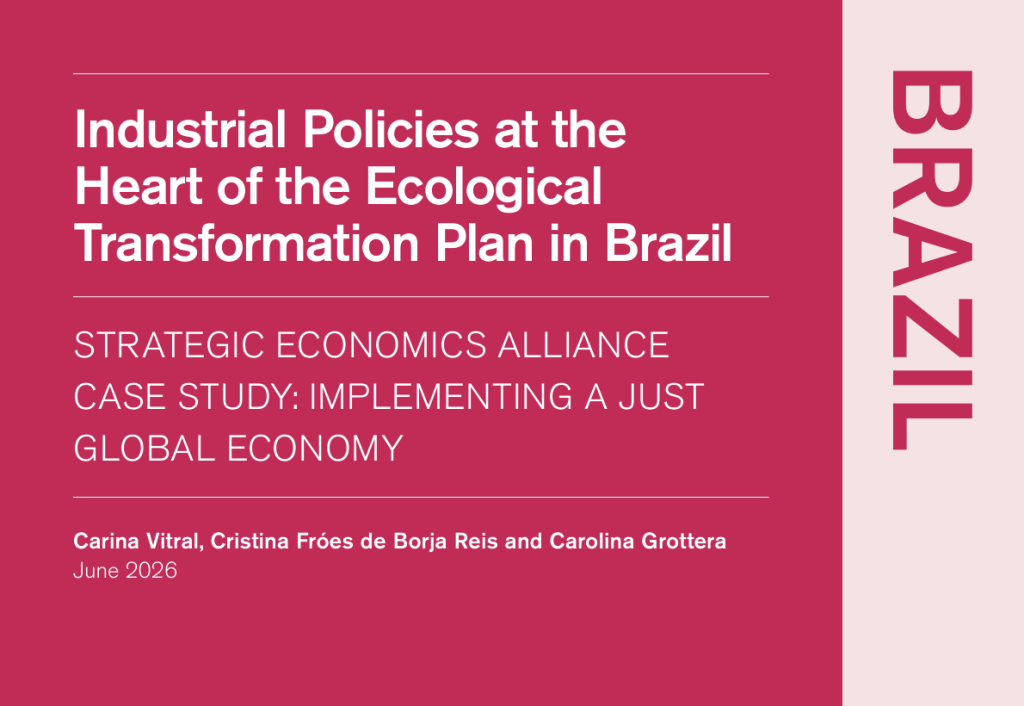
In this article, the industrial policy veins of the Ecological Transformation Plan (ETP) of the Ministry of Finance of Brazil get explicit. The objective is to show that combined with other major sustainable development plans of the Lula III administration, the ETP can promote deep structural changes through its financial, regulatory, tax, and administrative instruments. In particularly, some of the most important instruments are explained, such as the Compliance Carbon Market regulation, the Brazilian Sustainable Taxonomy, the Bioeconomy Plan, the Circular Economy plan, among others. The structure of the article includes, in the first section, a context of the ETP and its relationship with other plans and governmental sustainable development policies in Brazil since 2023, based on the structuralist approach. The second section highlights the industrial nature of ETP’s key instruments, showing how they are aligned with climate and development goals. And the third section presents estimates of the ETP’s impacts based on different studies and methodologies. As main conclusion, the ETP can reduce inequalities and promote decent work while establishing new technological routes of sustainable development, as shown by different macroclimate models.
Read at Strategic Economic Alliance
Full report: Implementing a Just Economy: A Case-Based Exploration